

Top EPS Cutting Machine Manufacturer Driving Innovation in Foam Processing
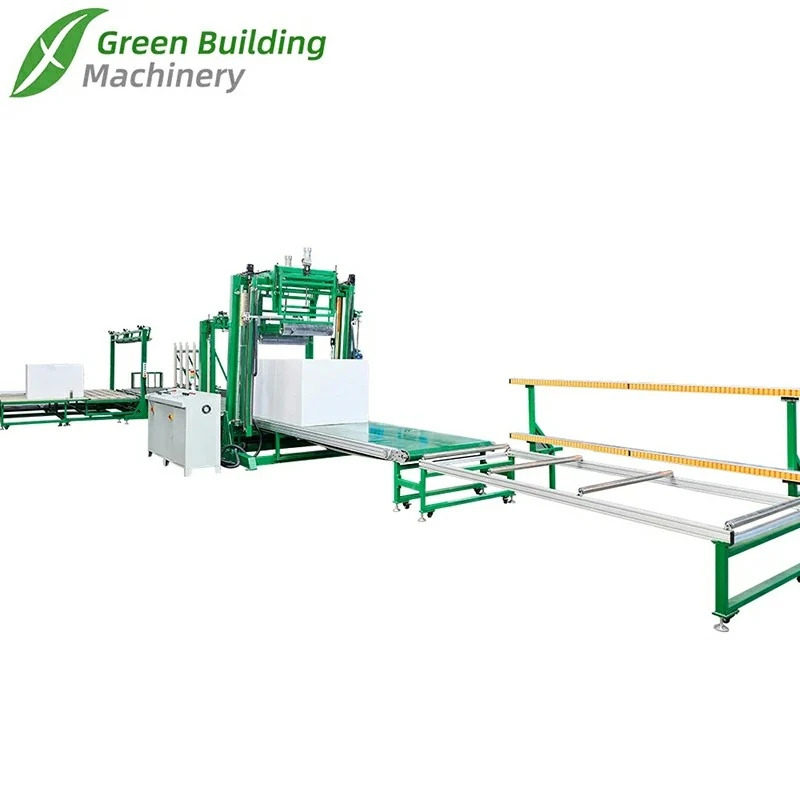
Automatic Continuous Vibrating-Wire Foam Cutter
JINHUA, ZHEJIANG, CHINA, November 2, 2026 /EINPresswire.com/ --
The Growing Demand for Advanced EPS Processing Equipment
As the global construction and packaging industries continue to seek lightweight, cost-effective, and energy-efficient materials, expanded polystyrene (EPS) has maintained an important position in numerous industrial applications. From building insulation and decorative architectural components to protective packaging and industrial molding, EPS offers flexibility, low weight, and useful thermal insulation properties. Supporting this market is the development of specialized machinery capable of improving processing accuracy, production efficiency, and material utilization. Jinhua Green Building Imp. and Exp. Co., Ltd. is part of this evolving industry, providing EPS-related machinery and solutions for manufacturers seeking reliable equipment. Its product portfolio includes EPS Cornice Moulding Machine and EPS Recycle System, reflecting two important areas of modern foam processing: precision shaping and material recovery.
EPS Cutting Technology Supports Modern Manufacturing
EPS is widely used because of its lightweight structure, insulating performance, and adaptability to different manufacturing processes. However, transforming raw EPS blocks into finished products requires specialized equipment capable of delivering consistent dimensions and shapes.
EPS cutting machines play an essential role in this process. Depending on their configuration, these machines use hot-wire cutting technology, computer-controlled movement, or other specialized mechanisms to process expanded polystyrene blocks into customized components. They are commonly used in the production of insulation boards, decorative moldings, packaging inserts, architectural details, and various customized foam products.
One of the major advantages of modern EPS cutting equipment is its ability to handle different shapes and specifications. Manufacturers can process materials into straight panels, curved profiles, decorative patterns, and complex geometries according to customer requirements. Computer numerical control (CNC) technology can further improve processing consistency by allowing operators to prepare cutting paths digitally and reproduce designs more accurately.
For manufacturers serving construction and decoration markets, production flexibility is particularly important. Different architectural projects may require specific cornice profiles, decorative dimensions, and surface designs. Equipment that supports customized processing can help manufacturers respond to changing orders while maintaining consistent product quality.
Jinhua Green Building Imp. and Exp. Co., Ltd. operates in this specialized machinery segment, where equipment performance and production adaptability are important considerations for EPS manufacturers. By offering machinery designed for foam processing, the company addresses practical requirements across construction-related manufacturing and other EPS applications.
EPS Cornice Moulding Machine Meets Architectural Decoration Requirements
Architectural decoration is an important application area for expanded polystyrene. EPS cornices are lightweight decorative profiles commonly used around ceilings, wall junctions, windows, and building facades. Compared with certain traditional decorative materials, EPS products can be easier to transport, handle, and install, depending on the product design and finishing system.
Producing these decorative components requires equipment capable of shaping foam materials into consistent profiles. An EPS Cornice Moulding Machine is designed to support the manufacturing of decorative cornices and related architectural molding products.
Depending on its configuration, such machinery may incorporate cutting wires, profile templates, automated movement systems, or computer-controlled processing functions. These features allow manufacturers to create different molding shapes and dimensions according to architectural designs.
The production of EPS cornices involves several important factors. Cutting accuracy influences the final profile, while processing stability helps maintain consistency across multiple production batches. Manufacturers must also consider material density, block dimensions, cutting speed, and the characteristics of the selected EPS material.
For companies supplying building decoration products, the ability to manufacture customized profiles can create additional business opportunities. Residential developments, commercial buildings, hotels, and renovation projects may all require different decorative designs. Flexible equipment can therefore help manufacturers expand their product offerings and accommodate smaller customized orders alongside standard production.
Jinhua Green Building Imp. and Exp. Co., Ltd. features EPS Cornice Moulding Machine among its product offerings. This equipment category reflects the growing demand for specialized foam-processing machinery in the architectural decoration market.
For prospective purchasers, evaluating an EPS cornice molding machine requires attention to several technical details. These include the maximum processing dimensions, available profile designs, cutting accuracy, production speed, control system, and compatibility with different foam specifications. The equipment's ease of operation and maintenance requirements are also relevant to long-term production planning.
EPS Recycle System Supports More Efficient Material Utilization
Material utilization has become an increasingly important consideration for manufacturers in the EPS industry. During cutting and shaping operations, foam production facilities may generate offcuts, rejected products, and other EPS waste. Without an appropriate recovery process, these materials can occupy valuable storage space and increase disposal requirements.
An EPS Recycle System provides a way to process suitable EPS waste for potential reuse. Depending on the system design, recycling operations may involve crushing, compacting, densifying, or other processing stages that reduce the volume of discarded foam materials.
EPS recycling equipment can help manufacturers manage production waste more systematically. By recovering suitable materials, businesses may reduce the amount of foam sent for disposal and improve the efficiency of their material management processes.
The recycling process generally begins with collecting and sorting EPS waste. Materials are then processed according to the equipment's design and the intended recycling method. Some systems reduce foam volume through mechanical compression or densification, while others prepare materials for subsequent recycling processes.
The choice of recycling equipment depends on several operational factors, including the amount of waste generated, the types of EPS materials being processed, available factory space, and the desired output. Manufacturers should also consider power consumption, processing capacity, maintenance requirements, and the compatibility of recycled material with downstream applications.
Jinhua Green Building Imp. and Exp. Co., Ltd. includes EPS Recycle System in its product portfolio, highlighting the importance of material recovery within the broader EPS manufacturing industry.
For EPS producers, integrating recycling equipment into existing production facilities may offer practical benefits. Offcuts generated during cutting operations can be collected and processed, helping establish a more organized production environment. The recovered material may then be directed toward suitable recycling applications, subject to material quality and processing requirements.
It is important to recognize that recycled EPS does not automatically have the same properties as virgin material. Its suitability depends on contamination levels, processing methods, and the technical requirements of the final application. Proper sorting and quality management are therefore essential parts of an effective recycling operation.
Combining Production Efficiency with Resource Management
The relationship between EPS cutting equipment and recycling systems illustrates a broader trend in foam manufacturing. Modern producers are increasingly evaluating machinery according to its contribution to the entire production process rather than focusing exclusively on individual machine performance.
For example, an EPS manufacturing facility producing architectural cornices may use specialized molding equipment to shape foam blocks into decorative profiles. Cutting offcuts and other suitable production waste can then be collected and directed to an appropriate recycling system.
This approach can help manufacturers establish a more coordinated production workflow. It may also improve factory organization by reducing the accumulation of loose foam waste and creating a defined material recovery process.
Jinhua Green Building Imp. and Exp. Co., Ltd. addresses these complementary requirements through its EPS Cornice Moulding Machine and EPS Recycle System product categories. While one supports the creation of finished foam products, the other focuses on processing suitable waste materials.
For businesses considering new machinery investments, the overall production layout should be carefully evaluated. Equipment capacity, material transportation, operator access, electrical requirements, and waste collection arrangements can all influence operational performance.
Manufacturers should also consider whether machinery can accommodate future production expansion. Selecting equipment with appropriate processing capacity and practical operating features may help reduce the need for frequent upgrades as order volumes increase.
Quality Control and Equipment Selection in the EPS Industry
As competition within the EPS manufacturing sector develops, product consistency and equipment reliability remain important purchasing considerations. Machinery buyers increasingly look beyond initial equipment prices and assess long-term operating costs, technical performance, and after-sales support.
For EPS cutting machines, key evaluation criteria include cutting accuracy, processing stability, operating speed, maximum working dimensions, and the reliability of electrical and control components. The quality of cutting wires and the stability of movement mechanisms can also influence the finished product.
For cornice molding equipment, buyers should pay particular attention to profile accuracy and the machine's ability to reproduce different decorative designs. Testing representative EPS materials before purchase can help determine whether the machine meets specific production requirements.
For recycling systems, important factors include processing capacity, waste compatibility, output density where relevant, energy consumption, and ease of maintenance. Buyers should clarify the expected condition of the processed material and whether it is suitable for their intended recycling arrangements.
Technical documentation and customer support are equally important. Installation instructions, operating manuals, maintenance guidance, spare parts availability, and technical assistance can contribute to more stable equipment operation.
Jinhua Green Building Imp. and Exp. Co., Ltd. participates in a market where customers need machinery solutions that align with practical manufacturing conditions. Clear communication about equipment specifications, production capacity, customization options, and delivery arrangements can help buyers make more informed purchasing decisions.
International Markets and the Future of EPS Machinery
The international EPS machinery market is influenced by developments in construction, packaging, building insulation, and environmental management. Growing demand for lightweight building materials and customized decorative components continues to create opportunities for specialized foam-processing equipment.
At the same time, manufacturers are paying greater attention to material recovery and production waste management. Recycling technologies are becoming an increasingly relevant part of discussions about resource efficiency and the responsible use of industrial materials.
Automation is another important development. Computer-controlled cutting systems, improved operating interfaces, and more coordinated production equipment can help manufacturers improve processing consistency and reduce reliance on repetitive manual operations.
For international machinery suppliers, understanding the different requirements of overseas customers is essential. Buyers may need equipment configurations adapted to local electrical standards, factory layouts, production volumes, and technical requirements. Reliable communication and appropriate after-sales support can therefore play an important role in building long-term business relationships.
Jinhua Green Building Imp. and Exp. Co., Ltd. operates within this changing industrial environment, serving customers interested in EPS processing machinery and related equipment. Its product categories reflect two practical priorities for the sector: manufacturing customized foam products and improving the management of production waste.
Looking ahead, the development of EPS machinery is likely to place increasing emphasis on processing precision, production flexibility, automation, and material utilization. Manufacturers that select suitable equipment and establish efficient production systems will be better positioned to respond to evolving customer requirements.
Company Profile: Jinhua Green Building Imp. and Exp. Co., Ltd.
Jinhua Green Building Imp. and Exp. Co., Ltd. is a company engaged in the EPS machinery and related equipment sector. Its product offerings include EPS Cornice Moulding Machine and EPS Recycle System, serving manufacturers involved in expanded polystyrene processing, architectural decoration, and foam material recovery.
The company's product categories address different stages of EPS manufacturing. EPS Cornice Moulding Machine is designed for producing decorative foam profiles and related architectural components, while EPS Recycle System supports the processing and recovery of suitable EPS production waste.
Through its focus on specialized foam-processing equipment, Jinhua Green Building Imp. and Exp. Co., Ltd. participates in an industry that serves construction, building decoration, packaging, and other applications involving expanded polystyrene materials.
Businesses interested in learning more about the company's equipment, product specifications, and available solutions can visit its official website at www.greenepsmould.com. Prospective customers can contact the company directly to discuss machinery configurations, processing requirements, production capacity, and international supply arrangements.
As demand for customized EPS products and more efficient material management continues to develop, specialized machinery will remain an important part of the industry's modernization. Jinhua Green Building Imp. and Exp. Co., Ltd. continues to serve this market through its focus on EPS processing and recycling equipment.
Address: No. 2 Huilan Road, Lanjiang Street, Lanxi City, Jinhua City, Zhejiang Province
Official Website: https://www.greenepsmould.com/
Ping Fang
Jinhua Green Building Imp. and Exp. Co., Ltd.
sally@cngreenindustry.com
Legal Disclaimer:
EIN Presswire provides this news content "as is" without warranty of any kind. We do not accept any responsibility or liability for the accuracy, content, images, videos, licenses, completeness, legality, or reliability of the information contained in this article. If you have any complaints or copyright issues related to this article, kindly contact the author above.
